Retrospective
Prep Flow
Year · 2022
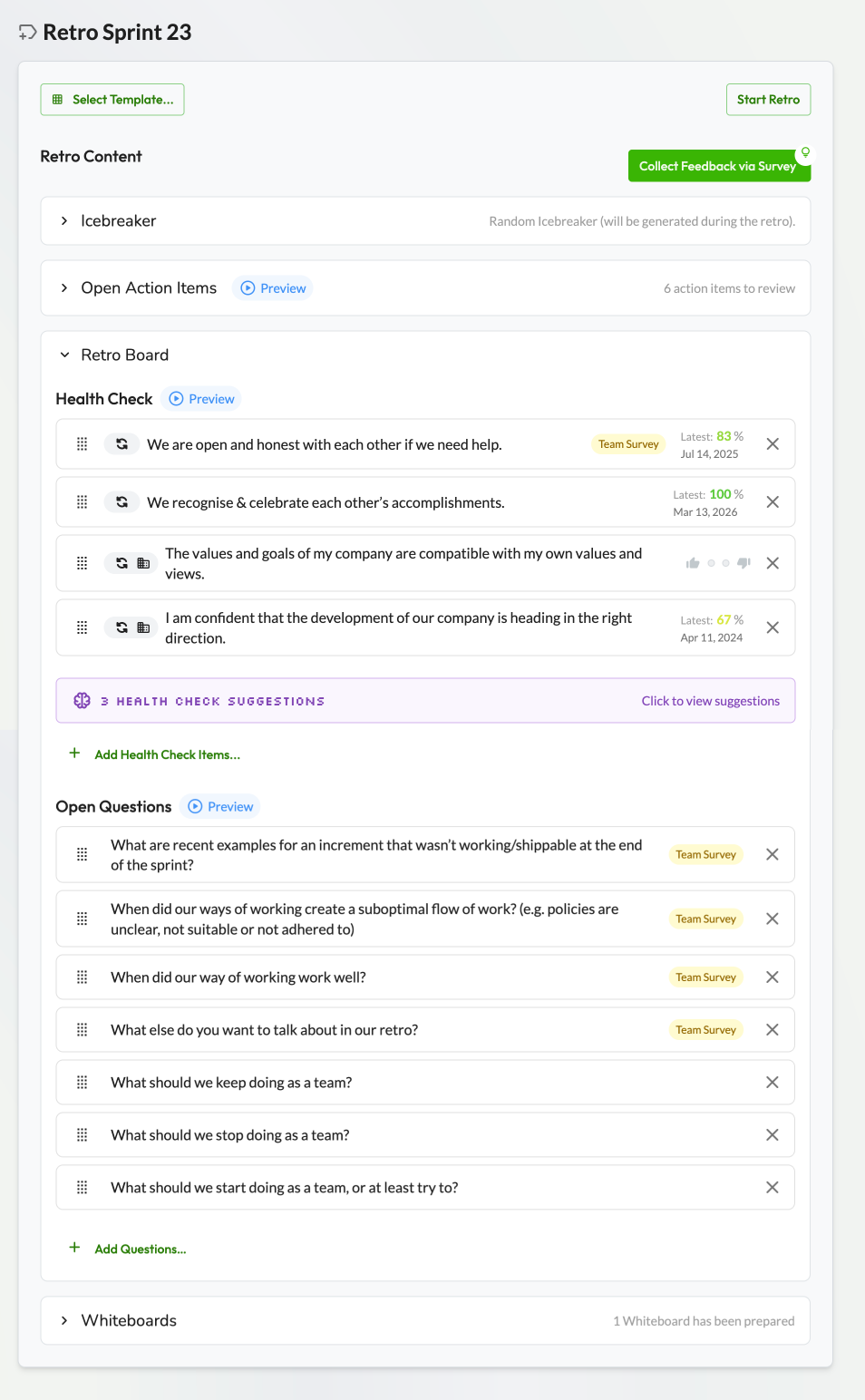
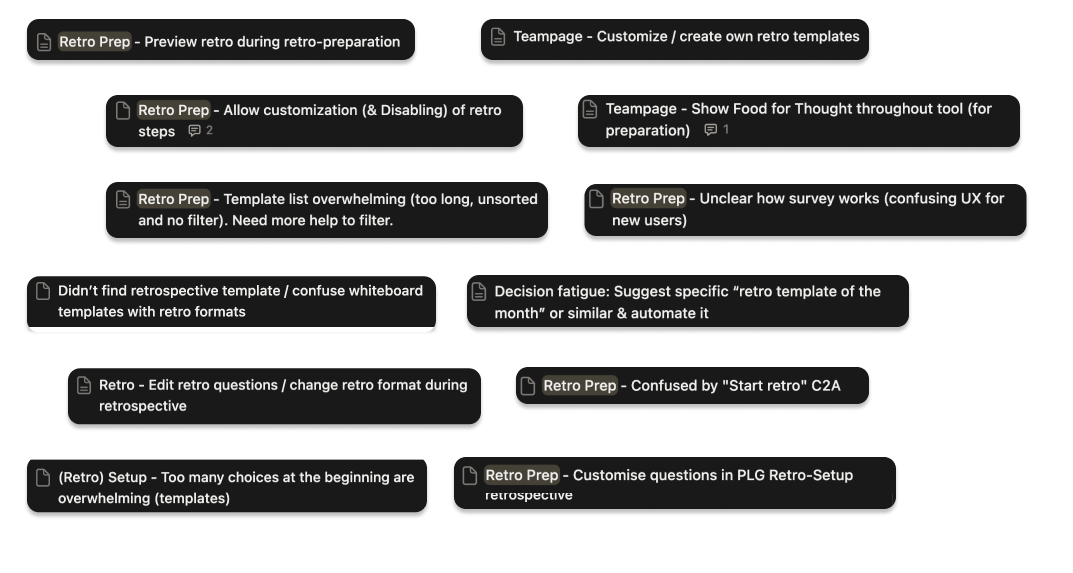
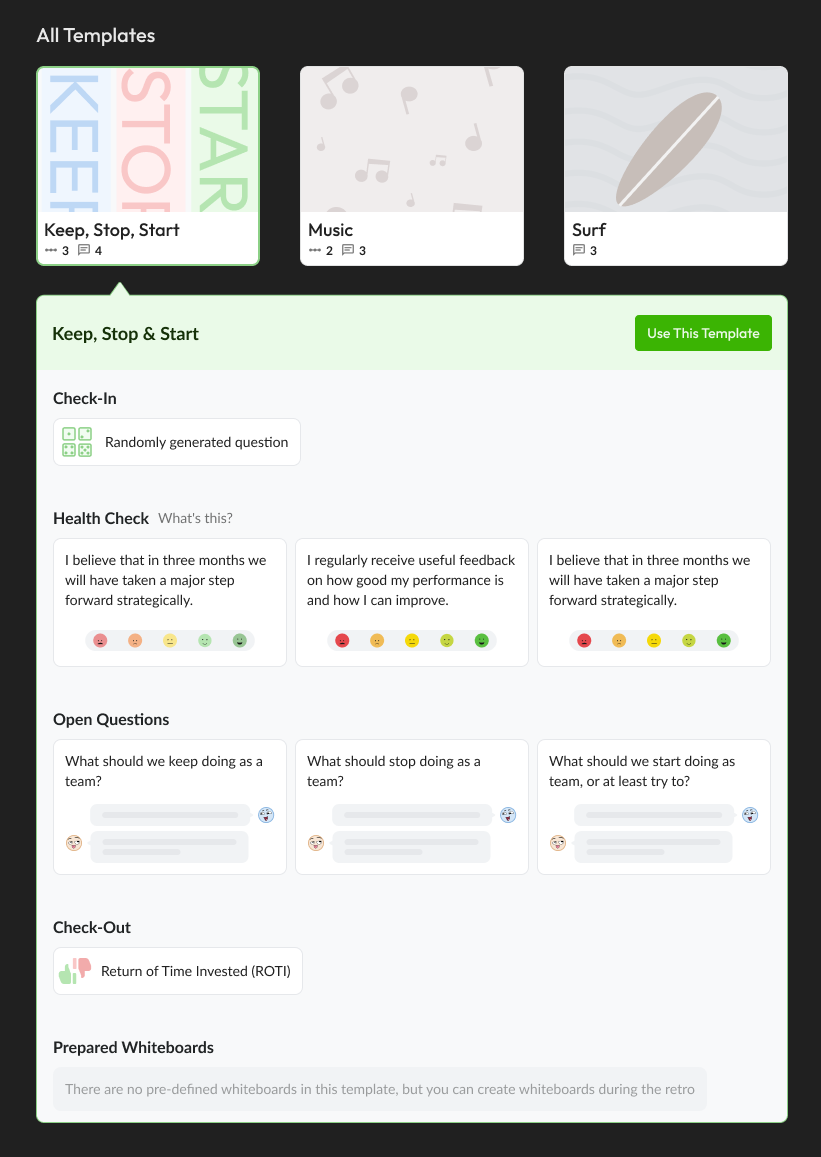
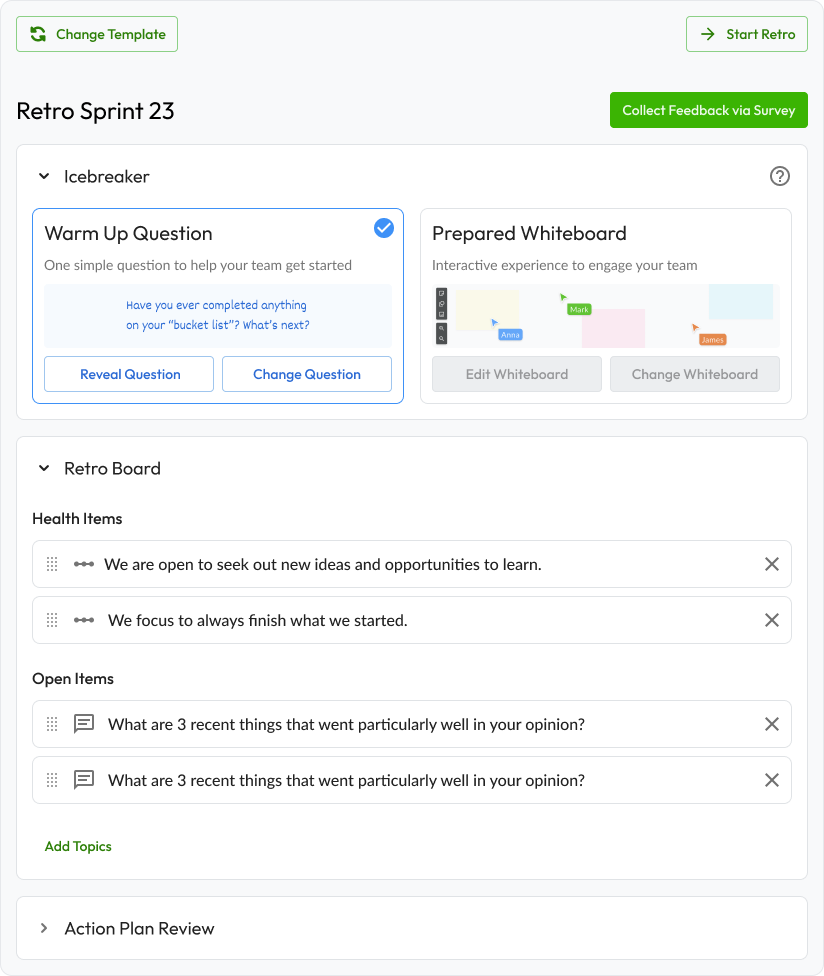
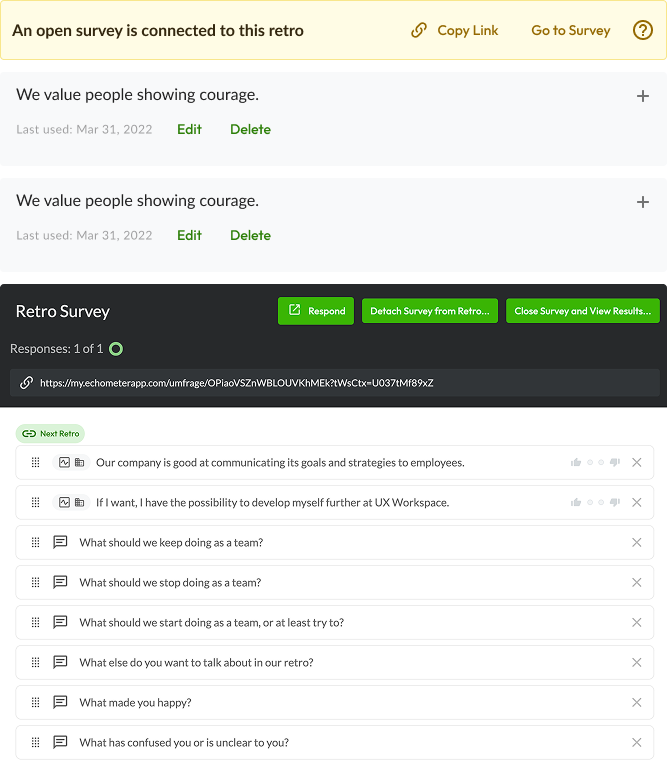
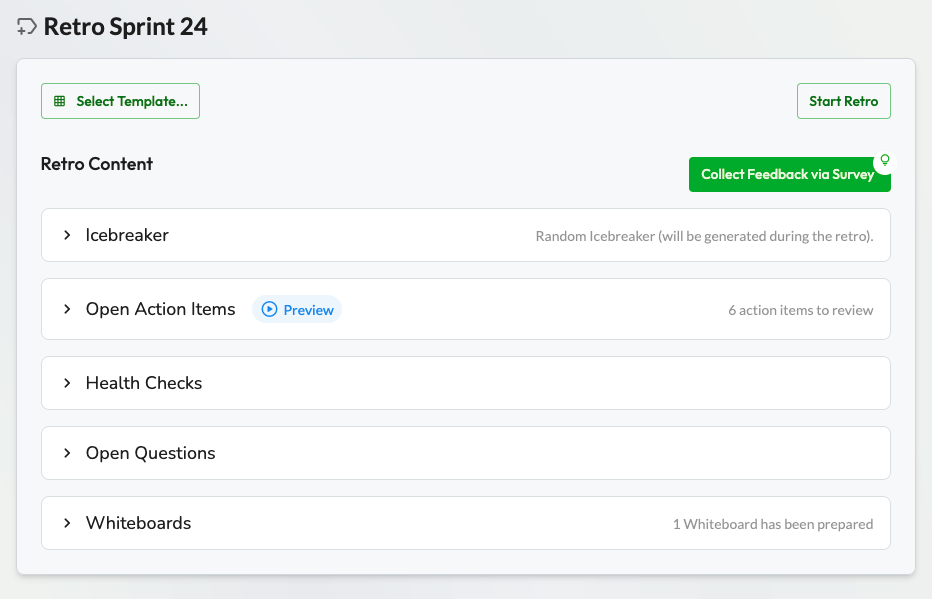
Users weren't converting to their first retrospective. Support tickets and user interviews pointed to the same problem: the preparation flow was cognitively overwhelming and structurally unclear.
I identified cognitive overload as the primary hypothesis. What made this project interesting was what we chose not to fix — and why that was the right call.
Overview
Company
Echometer
Year
2022
Methods
User interviews, usability testing, support ticket analysis
Team
4 — PM, Designer, 2 Engineers
Constraints
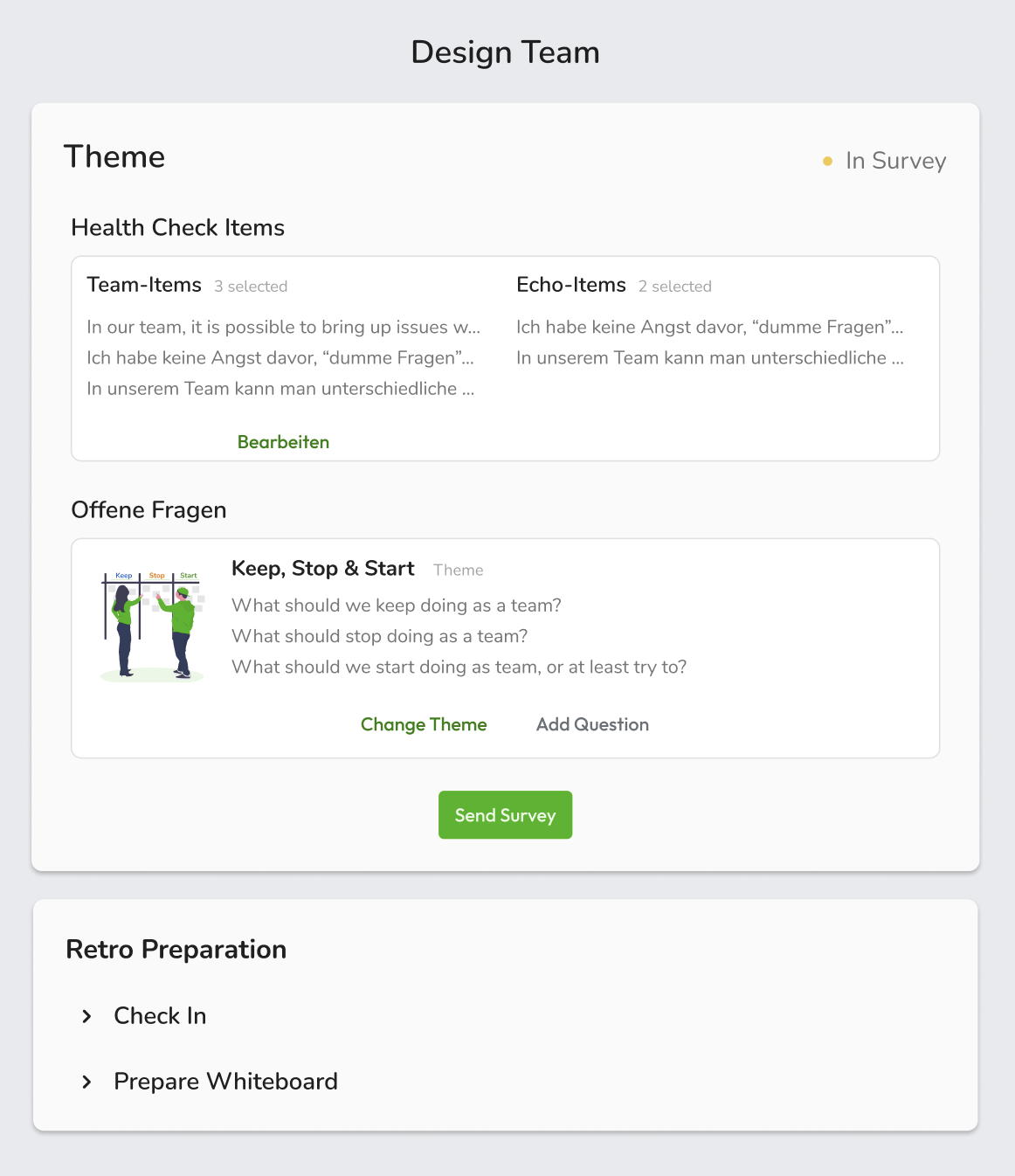
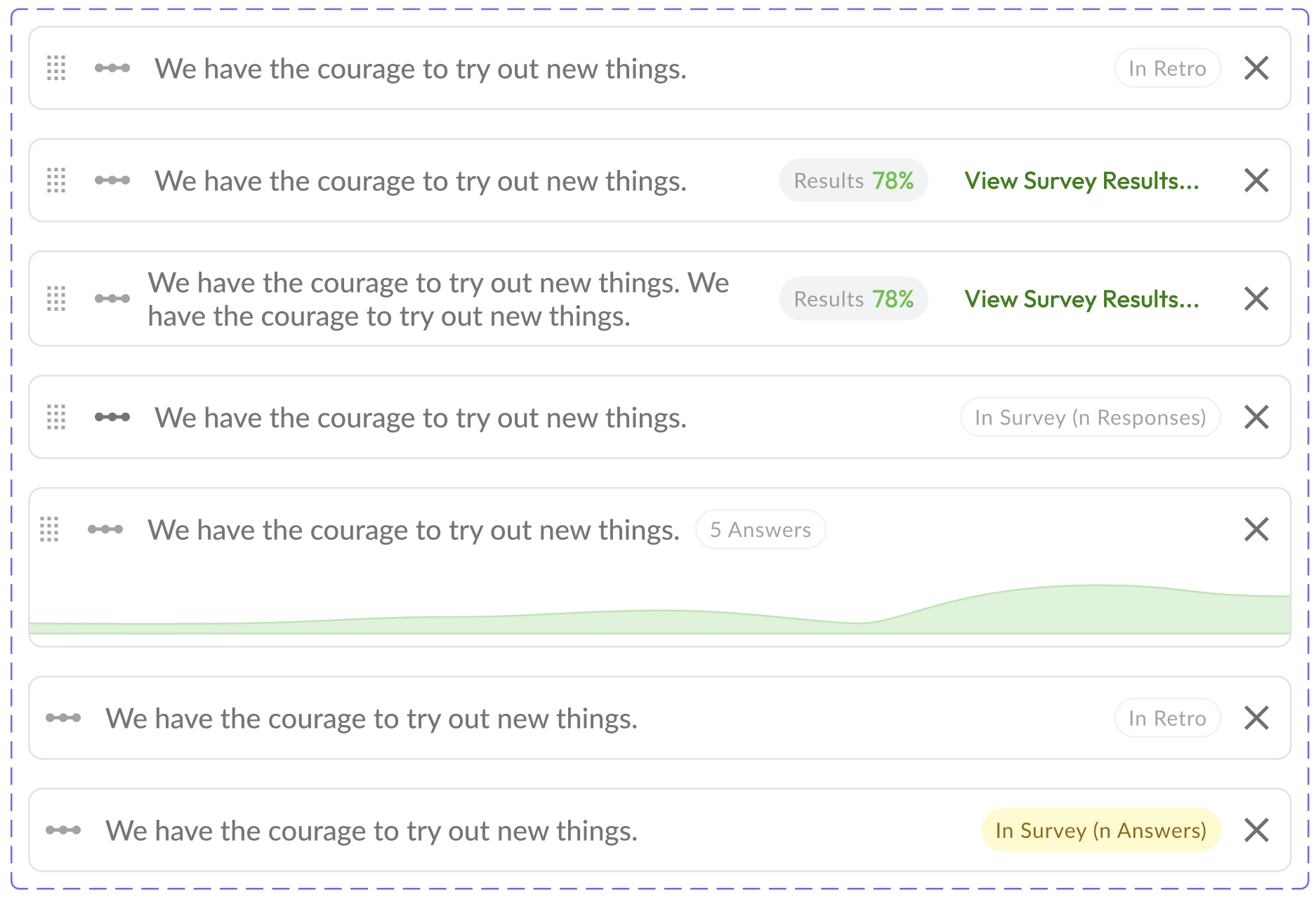
Item picker was deferred — item rotation logic, whiteboard wiring, and survey lock-in after sending made it too complex to fix in scope. Shipped a validated partial fix instead.
Role
Strategy
Design
Implementation
Validation
Credits
Strategy, UX/ UI Design, Prototyping. Camilla Maia
Strategy, Scoping. Jean Michel
Strategy, Implementation, Review. Robin Roschlau
Implementation. Johannes Niermman